
Understanding Cemetery Symbols: A Comprehensive Guide
Delve into the rich language of stone‚ exploring the fascinating world of cemetery symbolism through detailed guides and resources‚ often available as PDF downloads․

Cemetery symbolism represents a captivating intersection of art‚ history‚ and cultural beliefs‚ offering profound insights into the lives and deaths of those commemorated․ These enduring emblems‚ meticulously carved into headstones‚ transcend mere decoration; they communicate complex narratives about faith‚ social status‚ and personal virtues․ Understanding these symbols unlocks a deeper appreciation for the stories etched in stone‚ revealing the hopes‚ fears‚ and beliefs of past generations․
PDF guides dedicated to cemetery symbolism serve as invaluable resources for researchers‚ genealogists‚ and anyone curious about deciphering these visual narratives․ These documents often provide detailed explanations of common motifs – from weeping willows and broken columns to angels and skulls – contextualizing their meanings within specific historical periods and geographical regions․ Exploring these resources enhances the experience of a cemetery visit‚ transforming it from a passive observation into an active engagement with history and remembrance․
The Historical Context of Grave Symbols
Grave symbolism evolved significantly over time‚ reflecting shifting religious beliefs‚ artistic styles‚ and societal norms․ Early Christian cemeteries often featured simple crosses or geometric shapes‚ gradually incorporating more elaborate iconography as artistic techniques advanced․ The Victorian era‚ in particular‚ witnessed a flourishing of symbolic imagery‚ driven by a heightened interest in mourning rituals and a desire to commemorate life’s complexities․
PDF resources detailing the historical context of these symbols are crucial for accurate interpretation․ They illuminate how meanings changed across centuries and regions‚ preventing misinterpretations based on modern perspectives․ For example‚ a skull’s representation shifted from a stark reminder of mortality to a more nuanced symbol of resurrection․ Accessing these guides allows for a nuanced understanding of how cultural anxieties and spiritual beliefs shaped the language of the cemetery‚ providing a richer historical narrative․
Common Motifs and Their Meanings
Numerous recurring motifs populate cemeteries‚ each carrying layered meanings․ The deaths head‚ often depicting a skull and crossbones‚ symbolized mortality and the transition to the afterlife․ Soul effigies‚ winged skulls‚ represented the departing soul’s journey․ Hand symbolism varied – a pointing hand signified ascension to heaven‚ while a downward-pointing hand indicated death’s finality․ Willow trees embodied mourning and grief‚ while lambs symbolized innocence‚ particularly for children’s graves․
Comprehensive PDF guides are invaluable for deciphering these symbols․ They provide detailed explanations‚ acknowledging regional variations and historical shifts in interpretation․ These resources often include visual dictionaries‚ cross-referencing motifs with their associated meanings․ Understanding these common elements unlocks a deeper appreciation for the stories etched in stone‚ transforming a cemetery visit into a journey through cultural and personal histories‚ offering a richer understanding of past lives․
Deaths Head Symbolism
The deaths head‚ a prevalent motif in older cemeteries‚ is a stark reminder of mortality․ Typically depicted as a skull and crossbones‚ or a skull with wings‚ it served as a memento mori – a reminder of the inevitability of death․ Initially popular among early settlers and religious groups‚ it signified a direct confrontation with human finitude and the fleeting nature of earthly life․
Detailed PDF guides dedicated to cemetery symbolism offer nuanced interpretations of the deaths head․ They explain how variations – the presence or absence of wings‚ the depiction of teeth – could subtly alter the meaning․ Some guides trace its evolution from medieval art to colonial gravestones․ These resources help researchers and visitors understand that the deaths head wasn’t merely macabre‚ but a powerful spiritual symbol prompting reflection on life‚ death‚ and the afterlife․
Soul Effigy (Winged Skull) Explained
The soul effigy‚ often called a winged skull‚ represents the departed soul’s ascension to heaven․ Distinct from the deaths head‚ the addition of wings signifies the soul’s release from the body and its journey towards eternal life․ This symbol became particularly popular during the 18th and 19th centuries‚ reflecting evolving beliefs about the afterlife and a more hopeful outlook on death․
Comprehensive PDF guides on cemetery symbolism dedicate sections to deciphering the winged skull’s meaning․ They highlight how the style of the wings – feathered‚ stylized‚ or absent – can offer clues about the deceased’s religious beliefs or social standing․ These resources often include detailed illustrations and historical context‚ explaining the symbol’s origins and its prevalence in specific regions․ Understanding the soul effigy requires consulting such guides to appreciate its hopeful message amidst the somber landscape of a cemetery․
Hand Symbolism: Pointing Up vs․ Pointing Down
Hand motifs on gravestones carry profound symbolic weight‚ with the direction of the pointing finger drastically altering the message․ A hand pointing upwards signifies the soul’s ascent to heaven‚ representing hope and divine acceptance․ Conversely‚ a hand pointing downwards indicates a descent‚ often interpreted as a call to judgment or a soul remaining on Earth․
Detailed PDF guides dedicated to understanding cemetery symbols meticulously explain these nuances․ They emphasize that context is crucial; the accompanying symbols and inscriptions can further clarify the intended meaning․ These resources often showcase examples from various historical periods and regions‚ demonstrating how hand symbolism evolved․ Examining these guides reveals that a downward-pointing hand doesn’t necessarily denote damnation‚ but can also symbolize mortality or a connection to the earthly realm․ Careful study‚ aided by these resources‚ is key to accurate interpretation․
Religious Symbols in Cemeteries
Cemeteries frequently showcase a diverse array of religious iconography‚ reflecting the deceased’s faith and beliefs․ Common symbols include crosses‚ angels‚ biblical scenes‚ and representations of saints․ These emblems served not only as expressions of devotion but also as assurances of salvation and eternal life․
Comprehensive PDF guides on cemetery symbolism dedicate significant sections to deciphering these religious motifs․ They detail the specific meanings associated with different Christian denominations‚ Jewish traditions‚ and other faiths represented in burial grounds․ These resources highlight how the style and ornamentation of religious symbols evolved over time‚ influenced by artistic trends and theological shifts․ Accessing these guides provides a deeper understanding of the spiritual context surrounding these graves‚ enriching the experience of cemetery exploration and historical research․
Christian Cross Variations and Significance
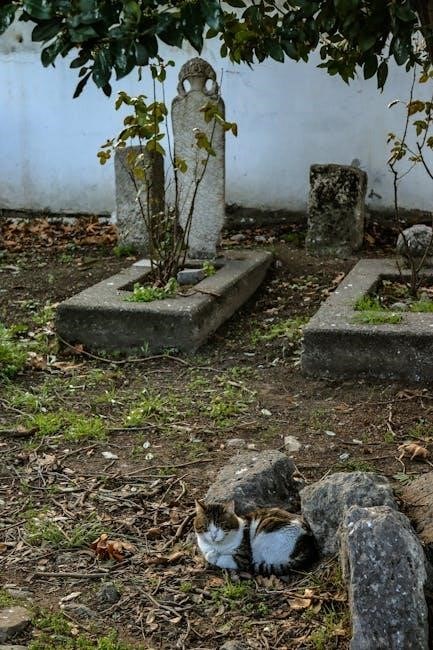
The Christian cross‚ a central symbol of faith‚ appears in numerous variations within cemeteries‚ each carrying distinct theological implications․ Simple Latin crosses represent the crucifixion‚ while Celtic crosses blend Christian iconography with pre-Christian knotwork‚ symbolizing eternity․ Greek crosses‚ with equal-length arms‚ emphasize balance and harmony․ Elaborate crosses may feature intricate carvings depicting scenes from the life of Christ or symbols of the Passion․
Detailed PDF guides dedicated to understanding cemetery symbolism offer in-depth analyses of these variations․ They explain how the choice of cross style often reflected the deceased’s denomination or personal beliefs․ These resources also explore the symbolism of accompanying elements‚ such as the corpus (body of Christ) or the INRI inscription․ Studying these nuances‚ as presented in these guides‚ unlocks a richer understanding of the religious convictions and artistic preferences prevalent during different historical periods․
Angelic Figures and Their Representations
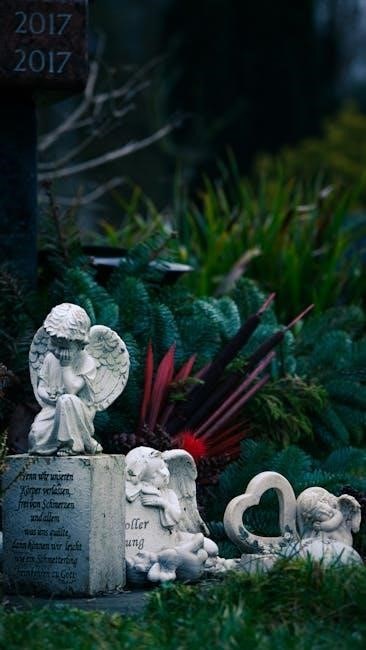
Angelic figures frequently adorn gravestones‚ serving as messengers between the earthly and divine realms․ These representations vary widely‚ from fully formed angels with outstretched wings to more symbolic depictions like draped figures or simply angel faces․ Angels often symbolize purity‚ protection‚ and the soul’s ascent to heaven․ Their posture and attributes – holding lilies (purity)‚ torches (eternal life)‚ or scrolls (scripture) – further refine their meaning․
Comprehensive PDF guides on cemetery symbolism dedicate significant attention to angelic iconography․ They detail how the style of the angel reflects prevailing artistic trends and religious interpretations of the time․ These resources explain the difference between guardian angels‚ mourning angels‚ and angels announcing resurrection․ Accessing these guides provides a deeper appreciation for the nuanced symbolism embedded within these celestial representations‚ offering insights into Victorian mourning practices and spiritual beliefs․
The Use of Biblical Imagery
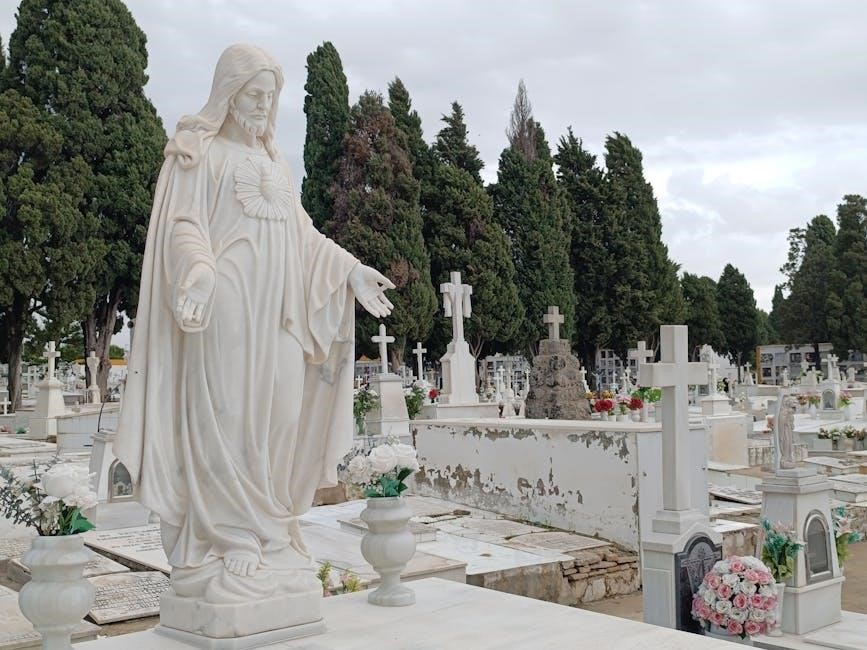
Biblical scenes and motifs are prevalent in cemetery art‚ offering a visual narrative of faith and salvation․ Common depictions include Adam and Eve (representing humanity’s fall and redemption)‚ Noah’s Ark (symbolizing hope and survival)‚ and the story of Lazarus (illustrating resurrection)․ These images weren’t merely decorative; they conveyed complex theological messages to those who could “read” the stone․
Detailed PDF guides dedicated to understanding cemetery symbols thoroughly analyze these biblical allusions․ They explain how specific scenes were interpreted within the context of 19th and early 20th-century religious beliefs․ These resources often provide illustrations and explanations of less common biblical references‚ helping researchers decipher the intended meaning behind these artistic choices․ Exploring these guides unlocks a richer understanding of the spiritual landscape reflected in historic cemeteries and the enduring power of biblical storytelling․

Flora and Fauna Symbolism
Cemeteries frequently feature carvings of plants and animals‚ each imbued with specific symbolic meaning․ Lambs‚ commonly found on children’s graves‚ represent innocence and purity․ Willow trees symbolize mourning and grief‚ their drooping branches mirroring sorrow․ Roses‚ depending on color‚ can signify love‚ beauty‚ or remembrance․ Detailed PDF guides dedicated to cemetery iconography meticulously catalog these floral and faunal symbols․
These resources explain the nuanced interpretations of various species‚ revealing how they reflected the deceased’s personality‚ beliefs‚ or social status․ For instance‚ a dog might represent loyalty‚ while a dove symbolizes peace․ Accessing these PDFs provides a deeper appreciation for the artistry and intentionality behind these natural motifs‚ transforming a cemetery visit into a journey of discovery and understanding of Victorian-era symbolism․
Lambs as Symbols of Innocence
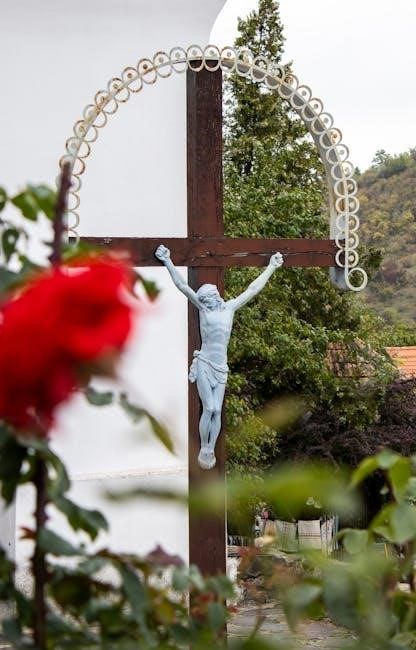
The lamb is a prevalent motif in cemeteries‚ almost exclusively marking the graves of children․ This symbolism stems from Christian iconography‚ where the lamb represents Jesus Christ as the “Lamb of God‚” embodying purity‚ innocence‚ and gentleness․ Its presence on a child’s headstone signifies their untainted soul and peaceful transition to the afterlife․ Detailed PDF guides on cemetery symbolism dedicate significant sections to this poignant imagery․
These resources often illustrate variations in lamb depictions – reclining‚ standing‚ or with a book – each subtly altering the message․ Exploring these PDFs reveals how the lamb’s portrayal evolved over time and across regions․ Understanding this symbolism offers a powerful connection to the grief and hopes of past generations‚ recognizing the universal desire to commemorate lost innocence․
Willow Trees and Mourning
The weeping willow‚ with its gracefully drooping branches‚ is a universally recognized symbol of grief and mourning frequently found in cemetery iconography․ Its association with sorrow dates back to ancient Greek and Roman mythology‚ representing lamentation and loss․ In the context of gravestones‚ a willow tree signifies enduring sadness and remembrance of the deceased‚ often a young person․ Comprehensive PDF guides dedicated to understanding cemetery symbols thoroughly explore this connection․
These resources detail how the willow’s imagery evolved‚ sometimes appearing alongside broken columns or urns to amplify the themes of mortality and regret․ Examining these PDFs reveals regional variations in willow depictions and their associated meanings․ The willow serves as a visual expression of heartfelt sorrow‚ offering solace and a tangible representation of enduring memory for those left behind․
Floral Symbols: Roses‚ Lilies‚ and More
Floral motifs are prevalent in cemetery art‚ each bloom carrying a specific symbolic weight․ Roses‚ for instance‚ often represent love‚ though color variations nuance the meaning – red for deep affection‚ white for purity‚ and yellow for friendship․ Lilies‚ particularly white lilies‚ are strongly associated with restored innocence and the soul’s return to purity‚ frequently adorning the graves of young women․ Detailed PDF guides on cemetery symbolism meticulously catalog these floral meanings․
These resources explain how other flowers‚ like forget-me-nots (remembrance) and chrysanthemums (grief)‚ contribute to the overall narrative of the gravestone․ Examining these PDFs reveals how Victorian-era “language of flowers” heavily influenced these choices․ Understanding these floral codes provides a deeper appreciation for the artistry and emotional depth embedded within these historic landscapes․
Symbolism Related to Life and Death
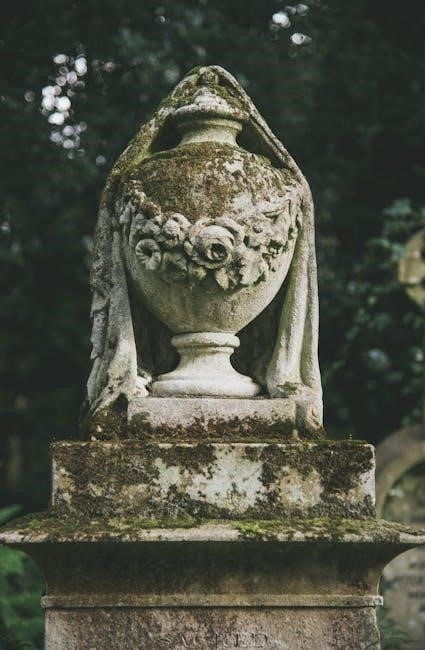
Grave markers frequently employ potent symbols representing the transition from life to death and beliefs about the afterlife․ Broken columns‚ a common sight‚ symbolize a life cut short‚ representing interrupted potential and mourning․ Urns‚ often depicted with draped cloths‚ signify mortality and the holding of ashes – a poignant reminder of earthly existence․ Comprehensive PDF guides dedicated to understanding cemetery symbolism thoroughly explain these motifs․
Hourglasses serve as stark reminders of the fleeting nature of time and the inevitability of death‚ urging contemplation of one’s own mortality․ These PDF resources detail how such symbols weren’t merely decorative but conveyed complex philosophical and religious ideas․ Studying these guides unlocks a richer understanding of the cultural context surrounding death and remembrance․
Broken Columns and Their Meaning
The broken column is a prevalent symbol in cemeteries‚ universally representing a life tragically cut short․ Often seen adorning the graves of those who died young‚ or unexpectedly‚ it signifies an interrupted life and unrealized potential․ The fractured state of the column visually communicates grief and mourning for opportunities lost․ Detailed PDF guides on cemetery symbolism dedicate significant attention to this motif‚ explaining its historical evolution and varied interpretations․
These resources reveal that the column itself often represents strength and stability‚ making its broken form all the more impactful․ Examining these PDFs provides insight into how families used this symbol to express their sorrow and honor the memory of loved ones․ Understanding the context within which these symbols were used is crucial for accurate interpretation․
Urns and the Representation of Mortality
The image of an urn‚ frequently depicted on gravestones‚ serves as a potent symbol of mortality and the containment of remains․ Representing the vessel holding the ashes of the deceased‚ it directly acknowledges the finality of death and the physical end of life’s journey․ Comprehensive PDF guides dedicated to understanding cemetery symbolism thoroughly explore the urn’s historical usage and evolving meanings․
These resources detail how the urn motif gained prominence during the Neoclassical period‚ drawing inspiration from ancient Greek and Roman funerary art․ Examining these PDFs reveals that the style of the urn – its ornamentation and material – can offer further clues about the deceased’s status or beliefs․ The urn isn’t merely a depiction of death‚ but a contemplative reminder of human existence․
Hourglasses and the Passage of Time
The hourglass‚ a recurring motif in historic cemeteries‚ powerfully symbolizes the fleeting nature of time and the inevitability of death․ Representing the limited span of human life‚ it serves as a stark memento mori – a reminder of mortality․ Detailed PDF guides on cemetery symbolism dedicate sections to deciphering this poignant emblem‚ tracing its origins and evolving interpretations․
These resources explain how the hourglass often appears alongside other symbols‚ like skulls or winged figures‚ amplifying the message of life’s transience․ Studying these PDFs reveals that the depiction of an hourglass – whether upright‚ inverted‚ or broken – can subtly alter its meaning․ A broken hourglass‚ for instance‚ might signify a life cut short‚ while a full one emphasizes time’s relentless flow․
Regional Variations in Cemetery Symbols
Cemetery symbolism isn’t universal; it exhibits fascinating regional variations‚ reflecting local beliefs‚ cultural influences‚ and artistic traditions․ PDF guides specializing in cemetery iconography often dedicate chapters to these distinct differences‚ highlighting how symbols are interpreted differently across geographical areas․ For example‚ New England cemeteries feature unique stone carvings not commonly found elsewhere․
These downloadable resources detail how symbols evolved within specific regions‚ influenced by immigration patterns and prevailing religious practices․ Examining PDFs focused on Victorian-era grave symbols reveals how mourning customs and artistic styles shaped the imagery used․ Understanding these nuances is crucial for accurate interpretation‚ as a symbol’s meaning can shift dramatically depending on its location and historical context․
New England Cemetery Symbolism

New England cemeteries are renowned for their distinctive iconography‚ deeply rooted in Puritan beliefs and colonial artistry․ PDF guides dedicated to New England grave art showcase the prevalence of winged skulls‚ known as soul effigies‚ and the frequent depiction of death’s heads – stark reminders of mortality․ These symbols‚ often carved from slate or brownstone‚ reflect a somber worldview․
Downloadable resources detail the meaning behind these motifs‚ explaining how they relate to concepts of salvation and judgment․ PDFs also illustrate the unique use of hand symbolism‚ with hands pointing upwards signifying ascension to heaven and downwards representing earthly existence․ Exploring these PDFs reveals how New England gravestones served as visual sermons‚ communicating religious messages to a largely illiterate population‚ offering a glimpse into the region’s history․
Victorian Era Grave Symbols
Victorian-era cemeteries embraced a more sentimental and elaborate approach to mourning‚ reflected in their abundant symbolism․ PDF guides focusing on this period reveal a shift from stark Puritan imagery to more comforting and ornate designs․ Common motifs included weeping willows‚ representing grief‚ and draped urns symbolizing the soul’s release․ Floral emblems‚ like roses and lilies‚ conveyed specific meanings – roses for love‚ lilies for purity․
Detailed PDF resources illustrate the popularity of broken columns‚ signifying a life cut short‚ and anchors‚ representing hope and steadfastness․ These guides often explain the Victorian fascination with mortality and the desire to create beautiful‚ lasting tributes․ Downloadable documents showcase how Victorian gravestones became works of art‚ reflecting the era’s aesthetic sensibilities and complex emotions surrounding death․

Resources for Further Research (PDF Guides)
Numerous PDF guides are available online‚ offering in-depth explorations of cemetery symbolism․ These resources‚ often compiled by historical societies and genealogical groups‚ provide detailed interpretations of common motifs and regional variations․ Many guides categorize symbols by religious affiliation‚ era‚ or specific meaning‚ aiding in accurate identification․ Downloadable documents frequently include visual dictionaries‚ cross-referencing images with their corresponding interpretations․
Researchers can find PDFs detailing New England’s unique stonecutter artistry and Victorian-era mourning practices․ University websites and library archives often host digitized versions of historical cemetery surveys․ These guides are invaluable for anyone seeking to decipher the stories etched in stone‚ offering a deeper understanding of past beliefs and cultural practices․ Exploring these PDF resources unlocks a wealth of knowledge for both amateur and seasoned enthusiasts․
Interpreting Cemetery Symbols: A Cautionary Note
While PDF guides and online resources offer valuable insights‚ interpreting cemetery symbols requires caution․ Symbolism evolved over time and varied regionally; a single motif can hold multiple meanings depending on context․ Avoid rigid interpretations and consider the overall design of the headstone‚ the individual’s life‚ and the prevailing cultural norms of the period․
Remember that stonecutters sometimes incorporated personal artistic flourishes or client requests‚ deviating from standard symbolism․ PDFs provide a foundation‚ but local historical knowledge is crucial․ Cross-reference information from multiple sources and acknowledge the potential for ambiguity․ Responsible interpretation respects the deceased and avoids imposing modern assumptions onto past beliefs․ Thorough research‚ combined with thoughtful consideration‚ yields the most accurate understanding․
0 comments on “understanding cemetery symbols pdf”Add yours →