Overview of Water Treatment Certification Exams
Water treatment certification exams evaluate a candidate’s grasp of treatment processes, distribution systems, regulatory standards, and quantitative skills. Administered by state and national agencies, they require study of official PDFs, practice tests, and real world scenarios toachieve passing score
Purpose and Scope
Water treatment certification exams serve to validate a professional’s competency in designing, operating, and troubleshooting potable water systems. They assess mastery of core processes—coagulation, flocculation, sedimentation, filtration, and disinfection—alongside the ability to manage distribution networks, interpret regulatory requirements, and perform essential calculations. The exams are administered by state agencies and national bodies, each with its own grading thresholds and terminology. Candidates must study official PDF study guides, review real‑world case studies, and complete practice question sets to achieve the required score. The scope extends from basic operational concepts to advanced troubleshooting scenarios, ensuring that certified operators can maintain safe, compliant water supplies under varying conditions. Candidates are evaluated on both theoretical knowledge and practical application, ensuring they can interpret water quality data, design treatment trains, and troubleshoot equipment failures. The exams also test familiarity with sampling protocols, water quality monitoring, and the use of software tools for hydraulic modeling. Passing the exam demonstrates that the operator can uphold public health standards, comply with EPA and state regulations, and respond to emergencies such as contamination events or system outages. Continuousprofessional developmentand recertification are often required to keep certifications current, reflecting evolving technology regulatorychanges.
Certification Levels and Grading
Water treatment certification programs are tiered to reflect increasing responsibility and technical depth. Most states offer a basic operator level, a grade‑2 or intermediate level, and a grade‑3 or senior level. The basic level focuses on routine operation, sampling, and safety, while the intermediate level requires knowledge of treatment chemistry, hydraulics, and system design. The senior level demands advanced troubleshooting, project management, and regulatory compliance. Grading scales vary: some states use a 70‑percent pass threshold, others require 80 or higher. Florida, for example, distinguishes grades by letter: a “C” is the minimum acceptable score for the basic exam, while an “A” or “B” indicates higher proficiency. In Maryland, consistent scores in the 80s or above typically signal readiness for the highest exam. Exam formats are standardized, featuring multiple‑choice questions, true/false items, and scenario‑based problems. Candidates receive a score card that lists the number of correct responses, the total number of questions, and the calculated percentage. Passing the exam grants a license that is renewable every few years, often requiring continuing education units (CEUs) to maintain certification. The grading rubric also accounts for question difficulty; some states weight higher‑level questions more heavily to reflect their importance in real‑world operations. Consequently, a candidate who scores 75% on a basic exam may still be considered competent if the majority of those points came from advanced topics. This nuanced approach ensures that certification reflects both breadth and depth of knowledge, preparing operators for the complexities of modern water systems. Exam prep stresses safety and emergency drills.
Exam Format and Question Types
Water treatment certification exams are delivered in a structured, timed format that blends multiple‑choice, true/false, and scenario‑based questions. Most state‑administered tests consist of 60 to 80 items, with a 90‑minute window for completion. The first portion typically covers basic operational concepts—sampling, monitoring, and safety protocols—while the second portion delves into advanced topics such as coagulation chemistry, membrane filtration, and disinfection kinetics. Question types vary: multiple‑choice items present four to five answer choices, requiring quick recall and application; true/false questions test precise understanding of regulatory definitions and standard operating procedures; scenario questions present a short narrative followed by several sub‑questions that assess problem‑solving and decision‑making under realistic constraints. Some exams incorporate “case study” sections where candidates must interpret data tables, calculate hydraulic loads, or design a treatment train based on given parameters. The grading algorithm assigns equal weight to each question, but certain high‑stakes items—often those involving critical safety or compliance issues—carry slightly higher point values. Candidates receive instant feedback on correct versus incorrect responses, allowing them to gauge knowledge gaps before the final score is calculated. The overall pass threshold is typically 70% or higher, but many states award a letter grade that reflects performance tiers (e.g., C, B, A). Preparation resources frequently mirror this structure, offering practice exams that replicate the exact mix of question types and difficulty levels found in official PDFs. Mastery of both content and test‑taking strategy is essential for achieving a passing score and advancing to higher certification levels. Exam takers are also evaluated on their ability to interpret graphical data, such as flow diagrams and water quality plots. Additionally, some exams include a brief written response section where candidates must explain the rationale behind a chosen treatment method. They also practice interpreting graphs and performing rapid calculations in real‑time scenarios.
Key Topics Covered in Exam PDFs
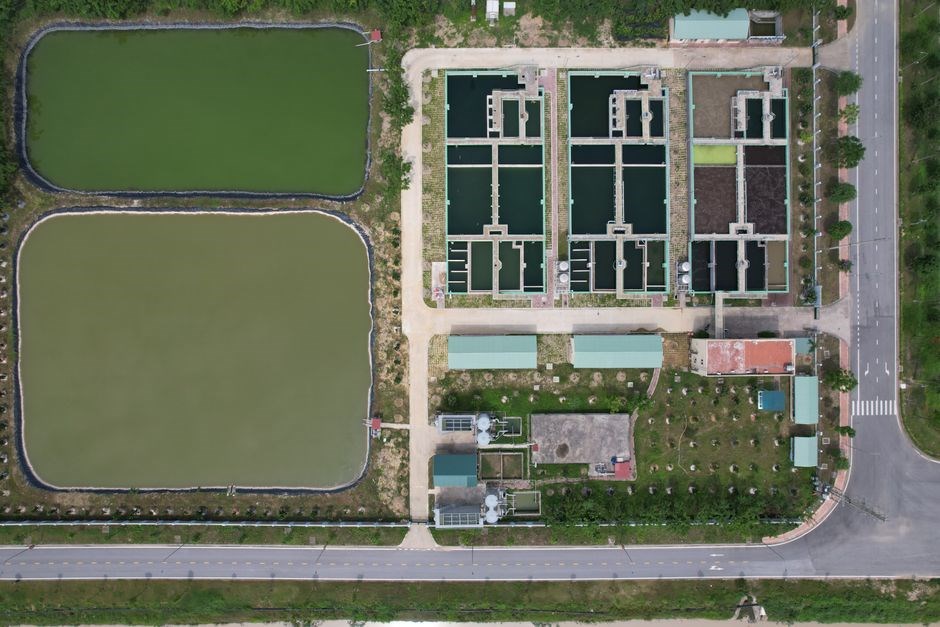
Exam PDFs emphasize coagulation chemistry, filtration media, disinfection methods, and distribution hydraulics. They cover EPA standards, state codes, and calculation drills for dose, flow, and chlorine residuals. Practice questions test interpretation of graphs, tables, and safety protocols.
Treatment Processes (coagulation, filtration, disinfection)
Coagulation questions probe optimal pH, dose, and floc size for various raw water qualities. Students must calculate alum or ferric chloride doses using standard curves, then select the correct jar test result from multiple choice options. Filtration sections focus on media selection (sand, anthracite, gravel), depth, and backwash frequency. Answers often require interpreting breakthrough curves and determining when a filter must be cleaned. Disinfection topics cover free and residual chlorine, UV, and ozone. Practice PDFs present scenarios where a plant must meet a 0.2 mg/L residual at 30 ft. students compute required contact time, dose, and evaluate the impact of turbidity on efficacy. The exam also tests knowledge of regulatory limits for disinfection by‑products, such as trihalomethanes and haloacetic acids, and asks candidates to choose the correct treatment strategy to keep them below EPA thresholds. In addition, questions assess understanding of advanced processes like membrane filtration, activated carbon adsorption, and ion exchange. Candidates must read data tables, perform unit conversions, and apply stoichiometric equations to select the best solution. Practice materials from WaterNuggets, Sacramento State books, and Amazon titles provide sample calculations and answer keys that mirror the exam’s format. Free online quizzes on RoyCEU and WEF reinforce these concepts through interactive problem sets. Mastery of these topics is essential for passing the water treatment certification exam with a score in the 80‑90% range.
Exam preparation also includes reviewing case studies, interpreting laboratory data, and practicing time‑management strategies. Candidates should routinely solve sample problems, review key equations, and discuss scenarios with peers to reinforce learning.
Distribution System Operations
Distribution system questions assess hydraulic modeling, pressure management, and leak detection. Candidates must calculate head loss using the Hazen–Williams equation, interpret pressure profiles, and determine optimal pipe sizing. Practice PDFs present scenarios where a plant must maintain 60 psi at the farthest tower; students compute required pump head and select the correct pump curve. Leak detection topics cover acoustic methods, pressure monitoring, and the use of SCADA data to locate losses. Questions often ask to identify the most probable leak location from a set of pressure readings; Water quality issues in the distribution network, such as disinfection residual decay, are tested by asking students to calculate chlorine decay over distance and time, and to choose the correct booster placement strategy. The exam also covers backflow prevention, including types of devices (double‑check valves, vacuum breakers) and their installation requirements. Candidates must interpret schematic diagrams to identify potential backflow paths and recommend appropriate control measures. Advanced topics include pressure‑reducing valve operation, water hammer mitigation, and the use of pressure sensors to detect network anomalies. Practice materials from WaterNuggets, Sacramento State books, and Amazon titles provide sample questions and answer keys that mirror the exam’s format. Free online quizzes on RoyCEU and WEF reinforce these concepts through interactive problem sets. Mastery of these topics is essential for passing the water treatment certification exam with a score in the 80‑90% range. Operators must master use of pressure gauges and flow meters to ensure compliance with state guidelines.
Regulatory Standards (EPA, state codes)
Exam questions on regulatory standards test knowledge of Safe Drinking Water Act, the EPA’s MCLs, and state‑specific amendments. Candidates must identify the maximum contaminant levels for arsenic, lead, and PFAS, and explain how the EPA’s “disinfection by‑product” rules affect chlorine dosing. State codes often add stricter limits; for example, Florida’s 2019 amendment requires a 0.5 µg/L PFAS limit, while California’s Prop 65 mandates labeling for certain chemicals. Questions ask to match a contaminant to its corresponding EPA standard and to calculate the permissible daily intake based on the EPA’s reference dose. The exam also covers the “Water System Operator” licensing requirements, including the need for refresher training and the documentation of compliance with the EPA’s “Water System Inspection and Maintenance” (WSIM) program. Candidates must interpret the EPA’s “Standard 3” for water system inspection frequencies and explain how a 90‑day inspection schedule differs from a 180‑day schedule in terms of risk mitigation. State codes may require additional testing frequencies; for instance, Maryland mandates quarterly turbidity testing for systems over 50 k gallons/day. Questions also cover the “Public Water System” definition, the “Emergency Action Plan” requirements, and the penalties for non‑compliance. Practice PDFs provide sample multiple‑choice items that ask to select the correct state code amendment for a given scenario, such as determining whether a 0.1 ppm fluoride level meets California’s 2018 standard. Understanding the interplay between federal and state regulations is essential for passing the certification exam with a score. Candidates must know the EPA’s WSIM schedule.
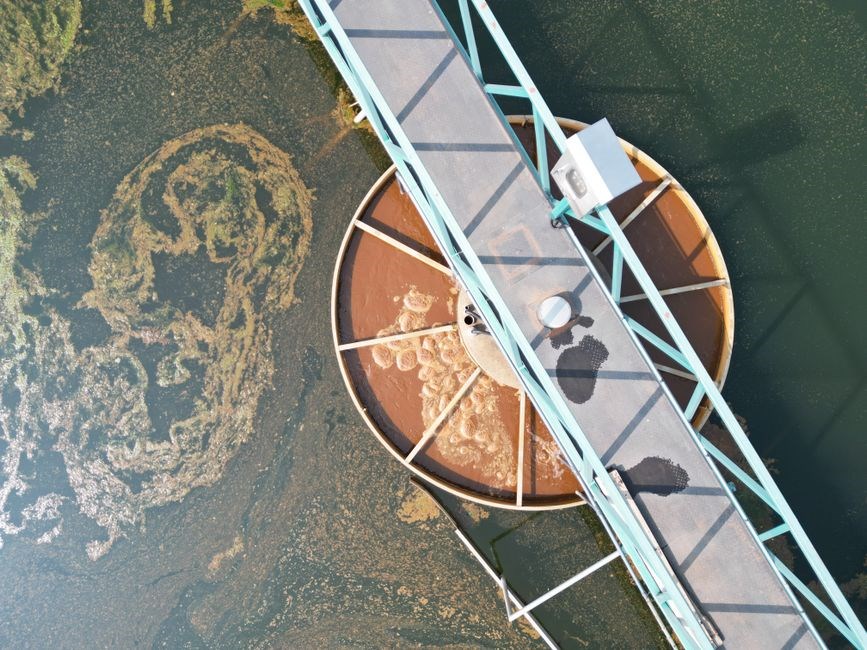
State codes also impose “source water protection” requirements; for example, the Maryland Water Resources Commission requires a protection plan for all public water systems. The exam includes case studies where a system fails to meet the EPA’s “Lead and Copper Rule” (LCR) and asks the examinee to outline the corrective action plan, including sampling intervals, corrosion control, and public notification. Mastery of these regulatory concepts, reinforced by practice PDFs and state‑specific study guides, is essential for achieving a passing score on the certification exam.
Calculations and Math Skills
Exam questions on calculations demand proficiency in unit conversions, mass balance, and dose‑response relationships. Candidates must convert flow rates from gallons per minute to liters per second, compute chlorine demand using the standard 1 mg/L per 1 mg/L of organic carbon, and determine the required dose to achieve a target free chlorine residual. Sample problems ask to calculate the volume of a 5 % sodium hypochlorite solution needed to treat 10,000 gal of water, requiring the use of the dilution equation C1V1=C2V2. Students also need to solve for the hydraulic retention time (HRT) of a sedimentation basin: HRT = V/Q, where V is basin volume in cubic meters and Q is the flow in cubic meters per hour. The exam tests the ability to apply the log reduction formula for disinfection: Log10(N0/N) = k·t, where k is the first‑order rate constant and t is contact time. Candidates must interpret the results to determine if a 4‑log reduction is achieved at a given contact time. Questions also cover the calculation of turbidity removal efficiency: Efficiency = [(Turbidity_initial – Turbidity_final)/Turbidity_initial] × 100%. In addition, exam items require the use of the Darcy–Weisbach equation to estimate head loss in a pipe: h_f = f·(L/D)·(V^2/2g), where f is the friction factor, L is pipe length, D is diameter, V is velocity, and g is gravitational acceleration. Candidates must select the correct friction factor from Moody charts for turbulent flow. The test also includes the calculation of the required filter media depth using the equation D = (Q·t)/(A·C), where D is depth, Q is flow, t is contact time, A is filter area, and C is the filtration coefficient. Mastery of these calculations, reinforced by practice PDFs and online calculators, is essential for scoring well on the certification exam. Time management and quick unit conversion drills are critical for success.
WaterNuggets.com offers full practice exams for treatment. Amazon titles “Water Treatment Practice Exams” and “Operator Certification”. Quizzes on RoyCEU and WEF cover topics. State guides for Florida, Maryland, California exist. and free now! Learn.
WaterNuggets.com Practice Exams
WaterNuggets.com provides a comprehensive suite of practice exams that mirror the format and difficulty of state‑level water treatment certification tests. Users can download PDF versions of both the water treatment and water distribution practice exams, each containing a mix of multiple‑choice and true/false questions. The exams are updated annually to reflect changes in EPA regulations and state codes, ensuring that candidates are exposed to current industry standards. By completing these practice tests, examinees can identify knowledge gaps, track progress, and adjust study plans accordingly. The platform offers instant feedback, including detailed explanations for each answer, which helps reinforce concepts such as coagulation chemistry, filtration media selection, and disinfection kinetics. Many users report that consistent practice with WaterNuggets’ PDFs has led to scores in the 80‑90% range, which is typically sufficient for passing the highest‑level exams. The practice exams are available for free, with optional premium content that includes video tutorials and interactive quizzes. For those preparing for the Florida or Maryland exams, the WaterNuggets PDFs include state‑specific regulatory references, making them a valuable resource for targeted study. Overall, the platform’s blend of realistic question sets, up‑to‑date content, and performance analytics makes it a top choice for candidates seeking to master the material covered in water treatment certification exams and real‑time data to.
Sacramento State Water Treatment Books (older versions)
Older editions of the Sacramento State water treatment manuals remain a staple for exam candidates seeking depth without the bulk of newer releases. These PDFs, often available through university archives or second‑hand vendors, focus on core principles—coagulation chemistry, filtration media, and disinfection fundamentals—while omitting recent regulatory updates. Candidates use them primarily as reference tools, consulting specific chapters to verify calculations or to cross‑check terminology that may appear in practice questions. Because the newer editions incorporate expanded sections on advanced treatment and updated EPA guidance, exam takers typically pair the older books with current state‑specific study guides or online resources. The concise layout of the older volumes makes them ideal for quick look‑ups during timed practice sessions, allowing users to locate equations, unit operations, or case‑study examples without sifting through supplementary material. Many reviewers note that the older texts provide a solid conceptual foundation, especially for the math portions of the exam, where classic equations for hydraulic loading and dose calculations are presented in a straightforward format. When combined with modern practice exams, the Sacramento State books serve as a reliable scaffold, reinforcing foundational knowledge while the candidate remains focused on the latest regulatory requirements. These resources are widely cited by exam takers for their clarity and alignment with test content!!
Amazon Titles: Water Treatment Practice Exams and Operator Certification
Amazon hosts two staple titles that many exam candidates turn to for focused, question‑driven study. The first, “Water Treatment Practice Exams and Grades,” is a compendium of multiple‑choice questions that mirror the structure of state certification tests. Each chapter covers a distinct topic—coagulation, filtration, disinfection, distribution, and regulatory compliance—and provides instant answer keys, allowing students to gauge progress and identify weak areas. The second, “Practice Exams for Treatment Operator Certification,” offers a similar format but emphasizes real‑world scenarios and problem‑solving. Both books include detailed explanations for each answer, helping readers understand underlying principles rather than memorizing rote facts. Users report that practice questions are often phrased identically to those found in official PDFs, making these resources invaluable for exam rehearsal. Because the books are updated annually, they reflect current EPA guidelines and state codes, ensuring that candidates study the most recent regulations. Many reviewers note that the concise layout and clear explanations make these titles ideal for last‑minute review sessions, especially when combined with online quizzes or the Sacramento State manuals. By repeatedly working through these Amazon titles, candidates can build confidence, improve test‑taking speed, and increase the likelihood of passing the water treatment certification exam with a strong score. Consistent daily sharpening skills!.
Free Online Quizzes (RoyCEU, WEF)
For candidates seeking cost‑free, interactive review, two online platforms stand out: RoyCEU.com and the Wastewater Education Foundation (WEF). RoyCEU hosts a broad array of quizzes covering core water‑treatment concepts—coagulation chemistry, filtration media, disinfection kinetics, and distribution‑system hydraulics. Each quiz presents multiple‑choice questions that mirror the structure of state certification exams, complete with instant feedback and explanations that clarify why a particular answer is correct or incorrect. The platform’s adaptive design tracks progress, highlighting topics that require additional study, and allows users to revisit questions at any time. WEF, on the other hand, offers a focused set of practice quizzes specifically tailored to wastewater‑operator certification. Two comprehensive quizzes are available, each containing realistic scenario‑based questions that test both theoretical knowledge and practical decision‑making. After completing a quiz, users receive a detailed answer key and a summary of key learning points. Both sites are free to access, requiring only a simple registration to unlock the full suite of practice materials. By integrating these quizzes into a structured study plan, exam takers can simulate test conditions, reinforce critical concepts, and build confidence without incurring additional costs. The combination of RoyCEU’s breadth and WEF’s depth provides a balanced, well‑rounded preparation tool for any water‑treatment certification candidate. Practice daily!
State‑Specific Resources (Florida, Maryland, California)
Florida candidates often use waternuggets.com for both water treatment and distribution practice exams, noting the state’s grading rubric assigns a “C” to scores in the 80‑85 range. The site also hosts the watersifu podcast series, offering concise explanations of key topics and exam‑style questions. Many Floridians purchase the Amazon titles “Water Treatment Practice Exams and Operator Certification” (ISBN 1709205970) and “Practice Exams for Treatment Operator Certification” (ISBN 1533506396); these books contain full question banks and answer keys that mirror the official exam format. Maryland exam takers report a heavy emphasis on distribution‑system questions, especially on the highest‑level and second‑highest water‑treatment exams; consistently scoring in the 80s or higher is cited as a reliable indicator of readiness. California resources are more fragmented; the Sacramento State Water Treatment books (older editions) are cited as reference guides for detailed process calculations, while the CA wastewater YouTube channel provides short math‑focused tutorials that many candidates use to reinforce their quantitative skills. State‑specific regulations, such as the Florida Water Quality Standards and the Maryland Environmental Service guidelines, are incorporated into these study materials, ensuring test takers are familiar with the legal framework that underpins the exam questions. By combining state‑focused practice exams, targeted reading from the Sacramento volumes, and supplementary podcasts or video tutorials, candidates can build a comprehensive, state‑aligned study plan that addresses both content knowledge and exam strategy. Additionally, state‑specific practice exams often include scenario questions that reflect local water sources, such as Gulf‑Coast brackish water challenges in Florida or Chesapeake Bay watershed issues in Maryland. Candidates are encouraged to review the state’s official operator certification handbooks, which outline required competencies and provide sample calculations. In California, the California State Water Resources Control Board’s guidelines are frequently referenced in the Sacramento volumes, and many students supplement their reading with the Board’s online training modules. Finally, a growing number of online forums and study groups focus exclusively on state exam strategies, offering peer‑reviewed practice questions and discussion threads that help clarify ambiguous regulatory language This integrated approach ensures readiness across all exam sections
0 comments on “water treatment exam questions and answers pdf”Add yours →